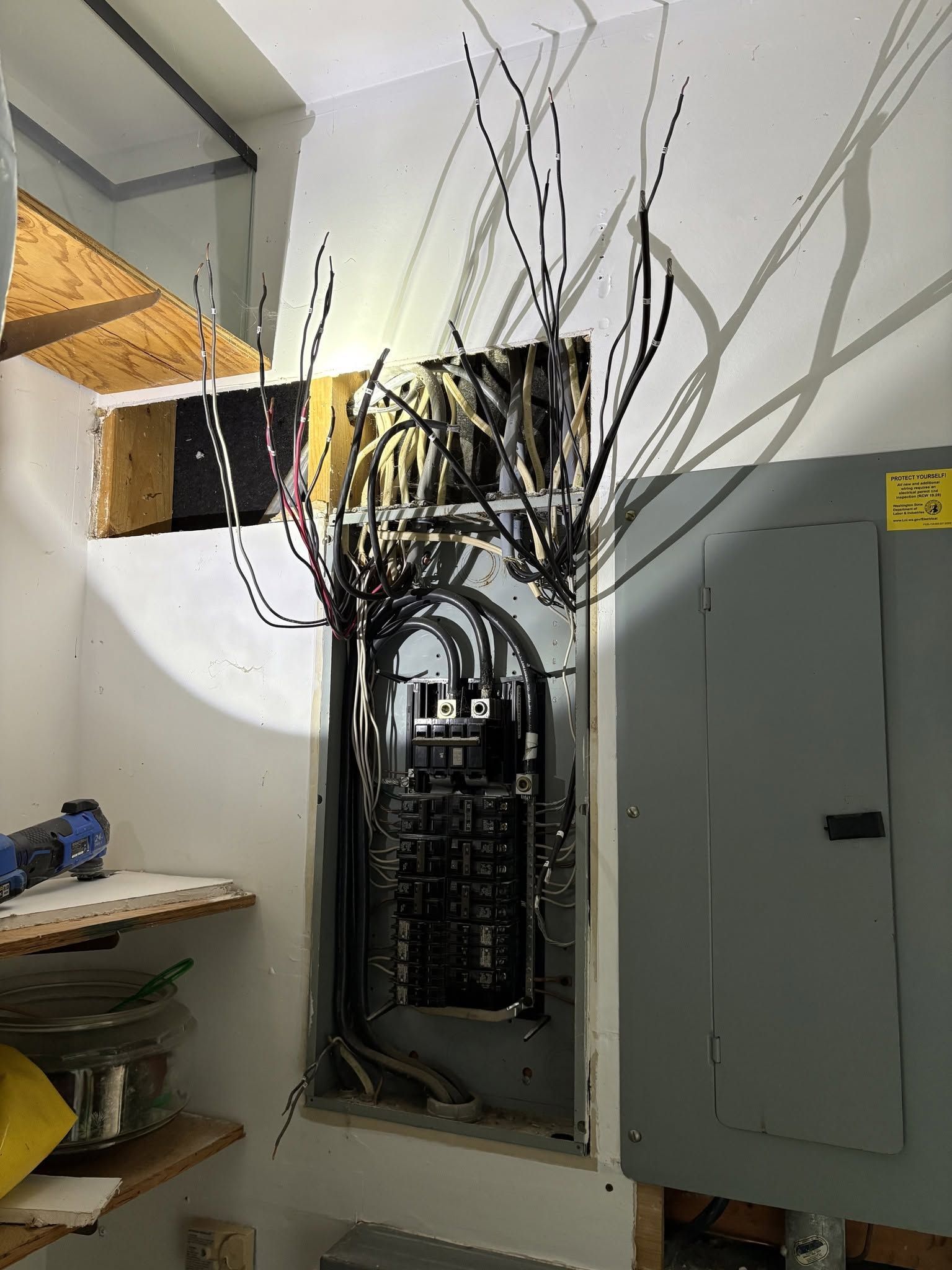
Hiring a licensed electrician is one of the most important decisions a homeowner can make. This guide explains why licensing matters, what the different license levels mean in Washington, and how to verify credentials before work begins. Whether you are planning a panel upgrade in Lacey, WA, or a whole-home rewire in Tumwater or Olympia, knowing who is working in your home protects your family, property, and wallet.
Why a Licensed Electrician Matters for Your Home
A licensed electrician has met Washington State's strict training and testing requirements. In Washington, electricians must obtain a license from the Department of Labor and Industries (L&I) to ensure they meet the qualifications to safely perform electrical work. An unlicensed worker has not proven their competency to anyone.
The stakes are real. Unpermitted electrical work can void homeowner's insurance. Most policies exclude damage caused by code violations, and if a fire starts in unpermitted wiring, your insurer may deny the claim entirely. That is a risk no Lacey, WA, homeowner should take.
Washington law is also clear on consequences. Unpermitted work discovered during a real estate transaction, insurance inspection, or utility connection request triggers an L&I compliance review, which can result in fines, forced removal of the work, and serious problems when selling your home.
What Do the Different Electrician License Levels Mean?
Washington has distinct license levels. Knowing the difference helps you ask the right questions before hiring.
Journeyman (Journey-Level) Electrician
Known in Washington as General Electricians, journeymen must complete approximately 8,000 hours of on-the-job training and pass the state journeyman exam. They are qualified to handle most residential and commercial electrical tasks.
Master Electrician
Master Electricians hold an advanced certification. Applicants must hold an active journeyman certificate for a required period, then pass a master electrician exam demonstrating advanced knowledge of electrical systems, code compliance, and supervision. Every licensed electrical contractor in Washington must designate a master electrician as its responsible managing employee.
What Does "Bonded and Insured" Mean for You?
These terms are often used together but protect you in different ways. A surety bond protects you as the customer: if a contractor abandons a job or performs defective work, the bond provides a financial guarantee so you can recover damages. Liability insurance protects the business when a third party suffers property damage or injury because of the work.
A contractor carrying all three credentials, a license, a bond, and insurance, has met government standards, posted financial guarantees, and purchased coverage for mistakes. Always ask for proof of all three before signing anything.
How to Verify an Electrician's License in Washington
Verification takes only a few minutes. Use the L&I "Verify a Contractor, Electrician or Plumber" tool at lni.wa.gov/verify-contractors. Search by business name, UBI number, or license number, then confirm the following:
- Registration status shows "Active."
- Bond status shows a current, active bond with sufficient coverage.
- Insurance status confirms active liability coverage.
A reputable licensed electrician will share their license number without hesitation. Confirm the name matches what appears on the L&I portal.
Electrical contractors need two credentials: a company-level Electrical Contractor (EC) license and a current individual Electrical Administrator (EL) license held by the qualifying supervisor on file with L&I.
Red Flags to Watch for Before You Hire
Watch for these warning signs:
- Requests for large cash payments upfront with no written estimate.
- No physical address or license number on their website, truck, or business card.
- Quotes significantly lower than others, which may indicate unlicensed or uninsured work.
- Pressure to skip permits, which is never acceptable for significant electrical work in Washington.
A common misconception is that work not requiring a permit does not require a licensed electrician. That is false: replacing fixtures, switches, and outlets may not need a permit, but the work must still be performed by a licensed electrician.